
A Pastoral Statement on James Talarico’s Theological Claims and Legislative Record
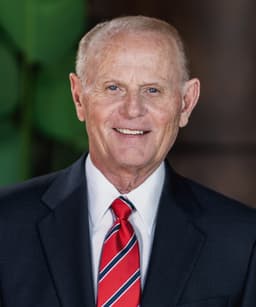
Pastor Steve Riggle
Founding Senior Pastor, Grace Church
We have a candidate running for Senate in Texas who has made some controversial claims about the Christian faith and the Bible.
As followers of Christ and people of the Word, one of our responsibilities, according to the apostle Paul in second Corinthians 10:5, is to “demolish arguments and every pretension that sets itself up against the knowledge of God."
In the following article, Pastor Steve Riggle addresses this candidate's claims from a biblical standpoint.
— Dr. Jason J. Nelson, Editor-in-Chief
There are moments when the Pastoral voice must speak clearly to current issues, potential election outcomes, and culture flashpoints as it has since the founding era in our nation.
When a public official invokes Christianity, appeals to Scripture, speaks with the credibility of theological training, and uses Christian doctrine to support positions on fundamental moral and theological questions, Christians have both the right and the responsibility to examine those claims according to the Word of God.
James Talarico has done exactly that.
Therefore, the fundamental question before us is not:
IS THIS REPUBLICAN OR DEMOCRAT?
The question is:
IS IT BIBLICAL?
Isaiah 8:20 says: “To the law and to the testimony! If they do not speak according to this word, it is because there is no light in them.”
OUR STANDARD MUST BE THE WORD OF GOD.
________________________________________________
WHY THE BOOK OF JUDE MATTERS
Jude is one of the shortest books in the New Testament. Only twenty-five verses. But it may be one of the most relevant books in the Bible for the generation in which we are living.
Jude tells us that he originally intended to write about “our common salvation.” But something changed. A spiritual danger had arisen that demanded immediate attention.
Jude 3 says: “…I found it necessary to write to you exhorting you to contend earnestly for the faith which was once for all delivered to the saints.”
Our responsibility is to:
Receive it. | Believe it. | Live it. | Teach it.
Defend it. | And pass it faithfully to the next generation.
Why such urgency? Because Jude says in verse 4: “certain men have crept in unnoticed…”
Notice the language. They did not announce themselves. They did not walk through the door wearing signs saying “FALSE TEACHER.” They crept in—quietly, gradually, using religious language, participating in the religious community, but changing the message.
The greatest danger confronting Jude’s church was not simply persecution from outside. It was deception from within. And that is why Jude speaks so powerfully to the church today.
________________________________________________
THERE IS A FAITH WORTH CONTENDING FOR
Jude says: “…contend earnestly for the faith which was once for all delivered to the saints.”
Notice what Jude does not say. He does not say: Create a new faith. Modernize the faith. Update the faith. Modify the faith. Make the faith conform to the morality of the surrounding culture.
He says: CONTEND FOR THE FAITH THAT HAS ALREADY BEEN DELIVERED.
Christianity is fundamentally revealed truth. God has spoken. Therefore, the Church—nor those who claim an authoritative voice by way of theological training or experience—have the authority to redefine what God has already revealed.
________________________________________________
THE FUNDAMENTAL ISSUE IS AUTHORITY
Behind nearly every major theological controversy confronting Christianity today is one enormous question: Who has the authority to define truth?
Historic biblical Christianity says: SCRIPTURE JUDGES ME.
Revisionist Christianity ultimately says: I JUDGE SCRIPTURE.
When Scripture agrees with contemporary morality, it is celebrated. But when Scripture conflicts with contemporary morality, suddenly Scripture must be reinterpreted, relativized, historicized, redefined, or dismissed.
Jesus said in John 17:17: “Your word is truth.”
Paul said in 2 Timothy 3:16: “All Scripture is given by inspiration of God…”
Therefore, the Christian question is not: “Does Scripture agree with me?” The question is: “Will I agree with Scripture?” That is the standard by which the following theological claims must be examined.
________________________________________________
ISSUE ONE — WHO HAS THE AUTHORITY TO DEFINE GOD?
James Talarico publicly stated: “GOD IS NONBINARY.” The argument attached to that statement is that God transcends human categories of gender.
There is a biblical truth that must be understood here. John 4:24 says: “God is Spirit…” God is not biologically male in the way a human male is biologically male. Both men and women are created in God’s image. But none of that gives human beings authority to redefine God’s revealed identity using contemporary categories of gender identity.
Jesus consistently revealed God to us as Father. Jesus taught us to pray (Matthew 6:9): “Our Father in heaven…” Jesus commanded His disciples in Matthew 28:19 to baptize “…in the name of the Father and of the Son and of the Holy Spirit.”
Christianity has confessed for nearly two thousand years: Father. Son. Holy Spirit.
The question is not whether God transcends human biology. Of course He does. The question is: Do human beings have the authority to rename God? Biblically, the answer is no. We do not determine God’s identity. God reveals His identity to us.
Biblical Christianity receives revelation. Revisionist Christianity revises revelation. That is an enormous difference.
________________________________________________
ISSUE TWO — IS JESUS CHRIST UNIQUELY GOD INCARNATE?
Talarico has also used language suggesting that incarnation should not be understood as something limited uniquely to Jesus Christ. That raises an extremely serious theological question.
Christianity teaches that human beings are created in the image of God. Christianity does not teach that human beings generally are incarnations of God. Those are completely different doctrines.
Genesis 1:27 says: “So God created man in His own image…”
Human beings are image-bearers. But John 1:1 says: “In the beginning was the Word, and the Word was with God, and the Word was God.”
Then John 1:14 declares: “And the Word became flesh and dwelt among us…”
Colossians 2:9 says of Jesus: “For in Him dwells all the fullness of the Godhead bodily.”
And 1 Timothy 3:16 declares: “God was manifested in the flesh…”
Jesus is not simply one manifestation of something universally true about humanity. Jesus is unique. He is the eternal Son. He is God who became man.
THERE ARE BILLIONS OF PEOPLE CREATED IN THE IMAGE OF GOD. THERE IS ONE INCARNATE SON OF GOD.
To blur that distinction diminishes the uniqueness of Jesus Christ and contradicts historic Christian Christology.
________________________________________________
ISSUE THREE — DID GOD CREATE MALE AND FEMALE?
The Bible begins with creation. And Genesis says: “Male and female He created them.” — Genesis 1:27
This is not simply an obscure Old Testament statement. Jesus Himself reaffirmed it. Matthew 19:4 says: “Have you not read that He who made them at the beginning ‘made them male and female’?”
Male and female are presented in Scripture as part of God’s created order. Human beings do not create themselves. God creates. We receive our existence from Him.
Psalm 139 says: “I will praise You, for I am fearfully and wonderfully made…”
Our bodies are therefore not meaningless containers attached to an independently defined self. Our embodied existence is part of God’s creation. God is the Creator. We are the created. The created does not possess authority to redefine the Creator’s design.
________________________________________________
ISSUE FOUR — DOES GALATIANS 3:28 ABOLISH MALE AND FEMALE?
Galatians 3:28 says: “There is neither Jew nor Greek, there is neither slave nor free, there is neither male nor female; for you are all one in Christ Jesus.”
This passage is sometimes used as though Paul were abolishing the distinction between male and female. But follow Paul’s argument. Does a Jewish person cease being Jewish after becoming a Christian? No. Does a Greek cease being Greek? No. Does biological sex disappear? No.
Paul is describing our equal standing before God. Men and women have equal value. Men and women receive the same salvation. Men and women inherit eternal life. But equality does not require sameness. The text destroys spiritual superiority. It does not destroy God’s created order.
________________________________________________
ISSUE FIVE — IS THE BIBLE “SILENT ON ABORTION”?
Talarico has publicly argued: “THE BIBLE IS SILENT ON ABORTION.” It is true that the modern English medical term “abortion” does not appear in Scripture. But absence of a modern term does not mean absence of biblical teaching concerning the underlying moral question.
The word “Trinity” does not appear in Scripture either. Yet the doctrine of the Trinity is unmistakably biblical. So the real question is not: Does our modern word appear? The question is: What does Scripture teach about human life in the womb?
Psalm 139:13 says: “For You formed my inward parts; You covered me in my mother’s womb.”
Psalm 139:16 says: “Your eyes saw my substance, being yet unformed.”
Jeremiah 1:5 says: “Before I formed you in the womb I knew you…”
Then consider Luke 1. Elizabeth is carrying John. Mary is carrying Jesus. Luke 1:41 says: “…the babe leaped in her womb…” Then Elizabeth says to Mary: “…the mother of my Lord…” Jesus had not yet been born. Yet He is already identified as Lord. Mary is already identified as His mother. John is described as a baby in the womb.
Therefore: The Bible may not contain our modern English medical term “abortion.” But the Bible is not silent about human life in the womb.
________________________________________________
ISSUE SIX — CHRISTIAN OPPOSITION TO ABORTION DID NOT BEGIN WITH AMERICAN POLITICS
It is sometimes suggested that Christian opposition to abortion is a relatively recent political development. History says otherwise.
One of the earliest Christian writings outside the New Testament is the Didache. Its moral teaching explicitly condemns abortion. This teaching comes from the earliest period of Christianity—long before Republicans, Democrats, American elections, the Religious Right, modern evangelicalism, or American culture wars.
Christians were teaching that unborn human life should not be intentionally destroyed. The conviction did not originate with modern American politics. It has deep roots in historic Christian moral teaching.
________________________________________________
ISSUE SEVEN — DOES MARY’S CONSENT PROVIDE A BIBLICAL ARGUMENT FOR ABORTION?
Talarico has appealed to Mary’s willingness to receive God’s calling when Gabriel announced that she would bear Jesus.
Mary says in Luke 1:38: “Behold the maidservant of the Lord! Let it be to me according to your word.”
Mary willingly surrendered herself to God’s purpose. But the passage does not establish that once another human life exists, another person possesses unlimited moral authority to terminate that life. In fact, Luke’s narrative moves in precisely the opposite direction.
John is treated as a baby in Elizabeth’s womb. Jesus is identified as Lord while still in Mary’s womb. Mary is identified as His mother. Mary’s great declaration is not “My body, my choice.” Her declaration is “Let it be to me according to your word.”
Mary’s story is about surrender to God, submission to God, and obedience to God. It cannot legitimately be transformed into a biblical argument for abortion.
________________________________________________
ISSUE EIGHT — HIS LEGISLATIVE RECORD ON ABORTION
These theological positions have not remained merely academic arguments. They have been reflected in Talarico’s legislative actions. That matters. Because what we believe eventually affects what we do.
In 2021, the Texas Legislature considered Senate Bill 8 — the Texas Heartbeat Act. The legislation prohibited most abortions after detection of embryonic or fetal cardiac activity, with a medical-emergency exception, and established a private civil enforcement mechanism.
TALARICO VOTED AGAINST SB 8.
The Texas Legislature also considered House Bill 1280. HB 1280 established Texas’s post-Roe abortion prohibition, subject to specified exceptions for serious medical circumstances, if the Supreme Court overturned Roe v. Wade or otherwise permitted states to prohibit abortion.
TALARICO VOTED AGAINST HB 1280.
But his legislative record goes further than voting against abortion restrictions. In 2023, he authored House Joint Resolution 56. The official legislative description proposed a constitutional amendment “to limit the legislature’s ability to pass laws prohibiting access to abortion care.” This was not merely a vote against somebody else’s legislation; This was legislation he authored.
He also authored House Bill 819. That legislation sought to repeal significant Texas abortion restrictions.
So the legislative record shows: He voted against SB 8. He voted against HB 1280. He authored a proposed constitutional amendment seeking to limit the legislature’s ability to prohibit abortion access. And he authored legislation seeking to repeal existing Texas abortion restrictions.
That record should be considered alongside the theological assertion: “The Bible is silent on abortion.”
________________________________________________
ISSUE NINE — HIS LEGISLATIVE RECORD ON GENDER-TRANSITION PROCEDURES FOR MINORS
There is another significant example where theology and public policy intersect. In 2023, the Texas Legislature considered Senate Bill 14. The legislation prohibited specified procedures and treatments for minors for the purpose of gender transitioning or gender reassignment and restricted public funding for those prohibited procedures and treatments.
TALARICO OPPOSED SB 14.
During debate over the legislation, he argued against restricting what advocates describe as gender-affirming medical care for minors. Why does that matter in a theological statement? Because it exists alongside a larger theological understanding of gender and human identity. And once again: doctrine has consequences.
A worldview that permits contemporary categories to redefine male and female will naturally reach different conclusions about gender policy than a worldview beginning with Genesis 1:27: “Male and female He created them.”
Christian author Frank Turek has observed regarding claims that Talarico’s Christianity is “achingly close” to Jesus:
“Calling James Talarico’s brand of Christianity ‘achingly close’ to Jesus’s reveals a social-justice lens so thick that people no longer care to interpret Jesus on his own terms, but would rather reimagine him on theirs. Talarico defends the murder of the unborn, the sexualization of children at drag queen story hour events, and has described teaching Bible stories in public schools as immoral. To describe such a person’s position as being ‘achingly close’ to Jesus is a war on the reality of who Jesus is, what He taught, and what it means to follow Him.” — Frank Turek, in comments to Fox News Digital
________________________________________________
WORLDVIEW EVENTUALLY BECOMES POLICY
This is the larger issue. A worldview never remains merely theoretical. Eventually what you believe about God affects what you believe about humanity. What you believe about humanity affects what you believe about morality. What you believe about morality eventually affects how you live. And for an elected official, it influences how you govern.
That is why theological statements and legislative actions cannot always be separated. There is a relationship between them. False ideas about God eventually produce false ideas about humanity. False ideas about humanity eventually produce false ideas about morality. False ideas about morality eventually produce decisions affecting real people.
DOCTRINE HAS CONSEQUENCES.
________________________________________________
ISSUE TEN — CAN CULTURE BECOME THE LENS THROUGH WHICH WE INTERPRET SCRIPTURE?
This may be the largest issue underneath everything else. Every generation is tempted to make Scripture conform to its culture.
Romans 12:2 says: “And do not be conformed to this world, but be transformed by the renewing of your mind…”
The Christian does not begin with “What does contemporary culture believe?” and then ask “How can I make Christianity accommodate it?” We begin with “What has God said?” Then God’s Word evaluates culture.
Colossians 2:8 warns: “Beware lest anyone cheat you through philosophy and empty deceit, according to the tradition of men… and not according to Christ.”
Culture does not possess authority over Scripture. Scripture possesses authority over culture.
________________________________________________
ISSUE ELEVEN — IS GOD A VERB, AND ARE WE GOD?
Talarico has stated: “God is not a Noun at all. God is a Verb. God is not a being. God is being self.”
A verb describes a state of “being” or action within a sentence. When this language is applied to God in the way Talarico uses it, the implication becomes clear: the distinction between Creator and creature collapses. In this framework, “we are God.” We are no longer image-bearers of God. We become gods.
This is not a minor semantic difference. It reverses the fundamental order of biblical revelation.
Scripture presents God as the eternal, personal, self-existent Being who is utterly distinct from
His creation.
Exodus 3:14 records God’s self-revelation to Moses: “I AM WHO I AM.”
God is not an impersonal process, a cosmic force, or a collective human consciousness. He is the living God who speaks, commands, judges, loves, and redeems. He is not “being itself” in a pantheistic or panentheistic sense that absorbs humanity into deity.
Isaiah 46:9 declares: “For I am God, and there is no other; I am God, and there is none like Me.”
Isaiah 42:8 says: “I am the Lord, that is My name; and My glory I will not give to another…”
Genesis 1:27 teaches that human beings are created in the image of God—image-bearers, not deities. The image of God is a dignity and a responsibility; it is not divinity. The serpent’s original lie in Genesis 3:5 was precisely this: “you will be like God.” That lie has never stopped
circulating.
When God is redefined as a verb or as “being itself,” and humanity is absorbed into that redefinition, the result is not a deeper spirituality. It is the ancient error of creating God in the image of fallen humanity. The Creator is reduced; the creature is inflated. The distinction that makes worship possible is erased.
Biblical Christianity confesses: There is one God. He alone is God. We are not. We are His image-bearers, called to know Him, worship Him, and be conformed to the likeness of His Son—not to become Him.
To collapse that distinction is not progressive insight. It is a return to the oldest deception in Scripture.
________________________________________________
PROGRESSIVE CHRISTIANITY CHANGES THE LOCATION OF AUTHORITY
This is the fundamental problem. Historic biblical Christianity says: Scripture judges me. Progressive revisionism ultimately says: I judge Scripture.
When Scripture agrees with contemporary moral assumptions, it is embraced. When Scripture contradicts contemporary moral assumptions, it is reinterpreted. Eventually Scripture no longer functions as the authority. The interpreter becomes the authority. Culture becomes the authority. Personal experience becomes the authority. Human reasoning becomes the authority.
But Paul said: “All Scripture is given by inspiration of God…” Jesus said: “Your word is truth.” So once again: The question is not “Does Scripture agree with me?” The question is “Will I agree with Scripture?”
________________________________________________
JUDE WARNED US ABOUT SPIRITUAL DECEPTION
Jude says: “certain men have crept in unnoticed…” That is the danger. False teaching does not always sound obviously false. It may sound intellectual, sophisticated, modern, inclusive, spiritual, compassionate—even biblical. But attractive language does not transform error into truth.
Think about poison. If someone mixed a small amount of poison into your food, would you say “Well, most of the meal is good”? What if the poison were white powder and somebody told you “It looks healthy”? What if they made it taste good? Would taste make poison safe? Of course not. Poison is still poison.
How much theological poison is acceptable? That is the wrong question. The question should be: Why would I knowingly accept anything that contradicts God’s Word?
________________________________________________
JUDE’S THREE OLD TESTAMENT WARNINGS
Jude 11 says: “Woe to them!” Then Jude gives us three examples.
CAIN — Cain represents religion without obedience. Cain wanted God, but on Cain’s terms. There is a Christianity today that wants Jesus without surrender, blessing without obedience, heaven without lordship, grace without repentance, Christianity without transformation. But Jesus is not simply Savior. Jesus is Lord.
BALAAM — Balaam represents spiritual influence corrupted by personal gain. Religion can become a means to money, position, recognition, influence, celebrity, or power. The anointing was never given to build a man’s kingdom. The anointing was given to advance God’s kingdom.
KORAH — Korah represents rebellion against God-ordained authority. At the heart of rebellion is the declaration “I will decide.” Biblical Christianity says “God has spoken.” That is the conflict.
________________________________________________
DO NOT CONFUSE ELOQUENCE WITH TRUTH
Jude gives us vivid pictures: clouds without water (they promise something but carry nothing); trees without fruit (appearance but no spiritual life); raging waves (noise, activity, movement, but no stability); wandering stars (something that has lost its fixed point cannot provide reliable direction to anyone else).
The warning is unmistakable. Never confuse charisma with character, intelligence with truth, education with orthodoxy, popularity with anointing, or eloquence with biblical faithfulness. The ultimate test remains: Does it agree with God’s Word? And does it produce the character of Jesus?
________________________________________________
FALSE GRACE PRODUCES FALSE FREEDOM
Jude 4 says these teachers turned “…the grace of our God into lewdness…” They preached grace without holiness, forgiveness without repentance, salvation without transformation, Jesus as Savior without Jesus as Lord.
But biblical grace does not free us to sin. Biblical grace frees us from the domination of sin. Real grace does not merely forgive what I was. Grace transforms what I am becoming.
Second Corinthians 5:17 says: “If anyone is in Christ, he is a new creation…”
The Holy Spirit does not come merely to make us feel God’s presence. He comes to form the character of Jesus in us.
________________________________________________
THE ANSWER TO A DECEIVED WORLD IS A SPIRIT-FILLED CHURCH
After nineteen verses describing apostasy, rebellion, immorality, false doctrine, deception, and judgment, Jude says: “BUT YOU, BELOVED…” I love those words. The world may do that. False teachers may do that. Mockers may do that. Culture may do that. But you. You are different. And Jude tells us how to live.
BUILD YOURSELF UP
Jude 20 says: “…building yourselves up on your most holy faith…” You have responsibility for your spiritual development. You cannot live forever on someone else’s spiritual experience. You need the Word in you, faith growing in you, truth established in you. You do not prepare for a storm during the storm. You prepare before the storm arrives.
Every time you open God’s Word, you are building. Every time you obey God, you are building. Every time you worship, you are building. Every time you exercise faith, you are building. Every time you faithfully gather with God’s people, you are building.
PRAY IN THE HOLY SPIRIT
Jude says: “…praying in the Holy Spirit…” The answer to spiritual deception is not merely greater intelligence. We need spiritual discernment. We cannot fight spiritual battles with natural resources alone. There are times when you do not understand the battle. You do not know what the enemy is doing. You do not know what tomorrow holds. But the Holy Spirit does.
Romans 8 teaches that the Spirit helps us in our weakness when we do not know how to pray as we ought. Spirit-filled prayer strengthens the inner person. It turns our attention from the battle toward God. It draws upon resources greater than ourselves. You cannot win a spiritual war with natural weapons.
KEEP YOURSELF IN THE LOVE OF GOD
Jude 21 says: “keep yourselves in the love of God…” Jude does not say “Make God love you.” God already loves you. He says: Stay close. Stay tender. Stay worshipful. Stay obedient. Stay connected to Jesus.
One of the dangers of contending for truth is becoming so focused on everything that is wrong that we lose intimacy with Jesus. We can become experts on error and neglect His presence. The purpose of contending for the faith is not to make us obsessed with everything wrong in the world. It is to keep us faithful to Jesus.
KEEP LOOKING FOR JESUS
Jude tells us to look “…for the mercy of our Lord Jesus Christ unto eternal life.” Our eyes should not remain fixed only on the battle. Lift up your eyes. Do not become obsessed with darkness. Do not spend your entire life giving the devil your attention. Jesus is coming. When you understand something of the future, you can live differently in the present.
________________________________________________
A SPIRIT-FILLED CHURCH RESCUES PEOPLE
Jude says: “…on some have compassion…” And of others: “…pulling them out of the fire…” We do not expose theological error simply because we enjoy winning arguments. People matter. Truth matters because people matter.
Some people are confused. Some are searching. Some have been deceived. Jude says: Have compassion. Others are moving rapidly toward destruction. Jude says: Pull them out of the fire. If somebody’s house is burning, you do not stand outside debating the architecture. You get them out.
The church cannot merely identify what is wrong with the world. We have been sent to rescue people from it.
________________________________________________
OUR PASTORAL CONCERN
The theological issues examined here are not minor denominational disagreements. They concern the authority of Scripture, the identity of God, the uniqueness of Jesus Christ, God’s created order of male and female, human life in the womb, the Creator–creature distinction, and the meaning and authority of biblical texts.
And the legislative record demonstrates that these ideas are not merely theoretical. They affect public policy. They affect law. They affect children. They affect unborn human life. They affect society’s understanding of human identity.
That is why the church cannot remain silent when Christian language is used to redefine biblical truth. The issue is not the personality of the person making the claim. The issue is the truth or error of the claim itself.
The question is not “Does it sound Christian?” The question is “Is it biblical?” Our responsibility is not to determine another person’s motives. Our responsibility is to test what is being taught against the Word of God.
When a theological claim contradicts Scripture, Christians should identify that contradiction plainly. Not redefine Scripture to accommodate it. Not excuse it because it is culturally acceptable. Not remain silent because speaking may become controversial.
TRUTH MUST REMAIN TRUTH EVEN WHEN TRUTH BECOMES UNPOPULAR.
The church did not create the faith. The church received the faith. Therefore we do not have the authority to change what God has revealed.
OUR CONFIDENCE IS NOT IN POLITICS
After everything Jude says about deception, apostasy, immorality, rebellion and judgment, notice where he ends. He does not end with false teachers. He does not end with culture. He does not end with politics. He does not even end with the devil. He ends with God.
Jude 24 says: “Now to Him who is able to keep you from stumbling…”
That is where spiritual warfare must ultimately be fought from. Not fear. But knowing something: God is able. Not “God is trying.” Not “God might.” Not “Hopefully God can.” “Now to Him who is able…”
God is able to keep you. His Spirit lives in you. His Word strengthens you. His grace sustains you. His presence accompanies you. The same God who called you is able to keep you.
________________________________________________
THE FINAL WORD
Jude says God is able “…to present you faultless before the presence of His glory with exceeding joy…” That is where this story is going. One day the battle will be over. Temptation will be over. Deception will be over. Sorrow will be over. And we will stand before Him—faultless. Not because we never failed. Because Jesus never failed. Not because of our righteousness. Because of His righteousness.
Then Jude ends: “To God our Savior, Who alone is wise, Be glory and majesty, Dominion and power, Both now and forever. Amen.”
The world may look chaotic. God has not surrendered His throne. Culture may change. God has not changed. False teaching may increase. Truth has not changed. Darkness may grow darker. The Holy Spirit has not lost His power. The church may face opposition. Jesus is still building His church. And Jesus is coming again.
Therefore:
IN A GENERATION OF COMPROMISE… WE WILL CONTEND FOR THE FAITH.
IN A GENERATION OF DECEPTION… WE WILL STAND UPON THE WORD.
IN A GENERATION OF SPIRITUAL WEAKNESS… WE WILL PRAY IN THE HOLY SPIRIT.
IN A GENERATION MOVING FARTHER FROM GOD… WE WILL RESCUE THOSE WHO ARE PERISHING.
AND WHILE THE WORLD GROWS DARKER… WE WILL KEEP LOOKING FOR JESUS.
The church must remain: biblical in our convictions, Spirit-filled in our power, Christlike in our character, courageous in our witness, uncompromising about truth.
Because Jude’s command still stands: “CONTEND EARNESTLY FOR THE FAITH WHICH WAS ONCE FOR ALL DELIVERED
TO THE SAINTS.”
And Jude’s promise still stands: “NOW TO HIM WHO IS ABLE TO KEEP YOU FROM STUMBLING.”
Amen.
SOURCES / REFERENCES
1. James Talarico 2021 video stating ‘God is non-binary’:
https://x.com/jamestalarico/status/1449100589380538377?s=20
2. Talarico’s own 2023 sermon:
https://www.youtube.com/watch?v=Blph_2RSBno
3. James Talarico full interview (2025) on the Joe Rogan Experience:
https://www.youtube.com/watch?v=_jOGPvMftb8
4. Searchable transcript from the Joe Rogan Experience interview:
https://joeroganpodcast.org/episodes/2352-james-talarico?t=8049
5. PBS 2025 interview discussing Talarico’s faith and political views:
https://www.pbs.org/video/the-full-conversation-with-rep-james-talarico-bfmdng/
6. The Ezra Klein Show podcast with Talarico on Christian theology:
7. Edited transcript from the Ezra Klein Show interview:
https://www.nytimes.com/2026/01/13/opinion/ezra-klein-podcast-james-talarico.html
Share this article
Stay Connected
Join our community of ministry leaders and receive the latest insights directly to your inbox.