
Father's Day in America
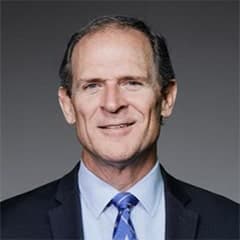
William J. Federer
Hon. D.Hum., American Christian College | Hon. D.G.L., Midwest University
U.S. Census Bureau, U.S. Department of Health & Human Services, Center for Disease Control, and other agencies report that children from fatherless homes are:
- Five times more likely to live in poverty;
- Nine times more likely to drop out of school;
- Twenty times more likely to go to in prison;
- Higher risk of drug and alcohol abuse;
- Increased incidents of internalized and externalized aggressive behavioral problems;
- Greater chance of runaways and homelessness;
- Twice as likely to commit suicide.
The first "Father's Day" was conceived by Grace Golden Clayton. She was inspired by the first Mother's Day observance in 1908. She reminisced of her father, Methodist Reverend Fletcher Golden, who raised her and her siblings after their mother died. Grace was also moved by the West Virginia Monongah Coal Mine explosion, December 6, 1907 - the worst mine disaster in the nation's history. In the town of 1,000 people, 360 men died in the mine, leaving families fatherless. Grace arranged for a single special service at Central United Methodist Church on July 5, 1908, saying:
“It was partly the explosion that set me to think how important and loved most fathers are. All those lonely children and those heart-broken wives and mothers, made orphans and widows in a matter of a few minutes. Oh, how sad and frightening to have no father, no husband, to turn to at such an awful time.”
The person responsible for making Father's Day an annual observance was Sonora Louise Smart Dodd. Hearing a church sermon on the newly established Mother's Day, she wanted to honor her father, Civil War veteran William Jackson Smart, who had raised six children by himself after his wife died in childbirth. The 28-year-old Sonora Louise Smart Dodd drew up a petition supported by the Young Men's Christian Association and the ministers of Spokane, Washington, to celebrate Fathers' Day on June 19, 1910.
With the help of the Y.M.C.A, Father's Day on the third Sunday in June, she helped spread it the next year to Oregon, then Chicago and then around the nation.
In 1916, Woodrow Wilson telegraphed a message to the Spokane Fathers' Day service.
In 1924, President Calvin Coolidge signed a Father's Day resolution: “to establish more intimate relations between fathers and their children and to impress upon fathers the full measure of their obligations."
Coolidge stated: "My father had qualities that were greater than any I possess. He was a man of untiring industry and great tenacity of purpose ... He always stuck to the truth. It always seemed possible for him to form an unerring judgment of men and things. He would be classed as decidedly a man of character.
I have no doubt he is representative of a great mass of Americans who are known only to their neighbors; nevertheless, they are really great."
Coolidge wrote to his father: “I am sure I came to it (the presidency) largely by your bringing up and your example.”
In 1966, Lyndon Johnson issued the first Presidential Father's Day Proclamation.
In 1972, President Nixon established Father's Day as a permanent national observance, Proclamation 4127, stating:
"To have a father — to be a father — is to come very near the heart of life itself. In fatherhood we know the elemental magic and joy of humanity. In fatherhood we even sense the divine, as the Scriptural writers did who told of all good gifts corning "down from the Father of lights, with whom is no variableness, neither shadow of turning" (James 1:17)—symbolism so challenging to each man who would give his own son or daughter a life of light without shadow ... "
Nixon added: "Our identity in name and nature, our roots in home and family, our very standard of manhood—all this and more is the heritage our fathers share with us … It has long been our national custom to observe each year one special Sunday in honor of America's fathers; and from this year forward, by a joint resolution of the Congress approved April 24, 1972, that custom carries the weight of law ...Let each American make this Father's Day an occasion for renewal of the love and gratitude we bear to our fathers, increasing and enduring through all the years. Now, Therefore, I, Richard Nixon, President of the United States of America, do hereby request that June 18, 1972, be observed as Father's Day."
On May 20, 1981, in a Proclamation of Father's Day, President Ronald Reagan stated:
'Train up a child in the way he should go: and when he is old, he will not depart from it,' Solomon tells us. (Proverbs 22:6) Clearly, the future is in the care of our parents. Such is the responsibility, promise, and hope of fatherhood. Such is the gift that our fathers give us.
Dr. Ben Carson explained: “The more solid the family … the more likely you are to be able to resist peer pressure …Human beings are social creatures. We all want to belong, we all have that desire, and we will belong, one way or another … If the family doesn't provide that, the peers will, or a gang will, or you will find something to belong to.”
On Father's Day, 1988, Ronald Reagan said:
"Children, vulnerable and dependent, desperately need security, and it has ever been a duty and a joy of fatherhood to offer it. Being a father requires strength ... and more than a little courage ... to persevere, to fight discouragement, and to keep working for the family ..."
Reagan ended: "Let us ... express our thanks and affection to our fathers, whether we can do so in person or in prayer."
On December 6, 1904, President Theodore Roosevelt addressed Congress:
"No Christian and civilized community can afford to show a happy-go-lucky lack of concern for the youth of to-day; for, if so, the community will have to pay a terrible penalty of financial burden and social degradation in the to-morrow."
These are just a few reminders from our Nation’s leaders of the significance of Father’s Day and the God ordained role fathers are to play in shaping the future.
To learn more about William Federer, visit https://americanminute.com/
Share this article
Stay Connected
Join our community of ministry leaders and receive the latest insights directly to your inbox.